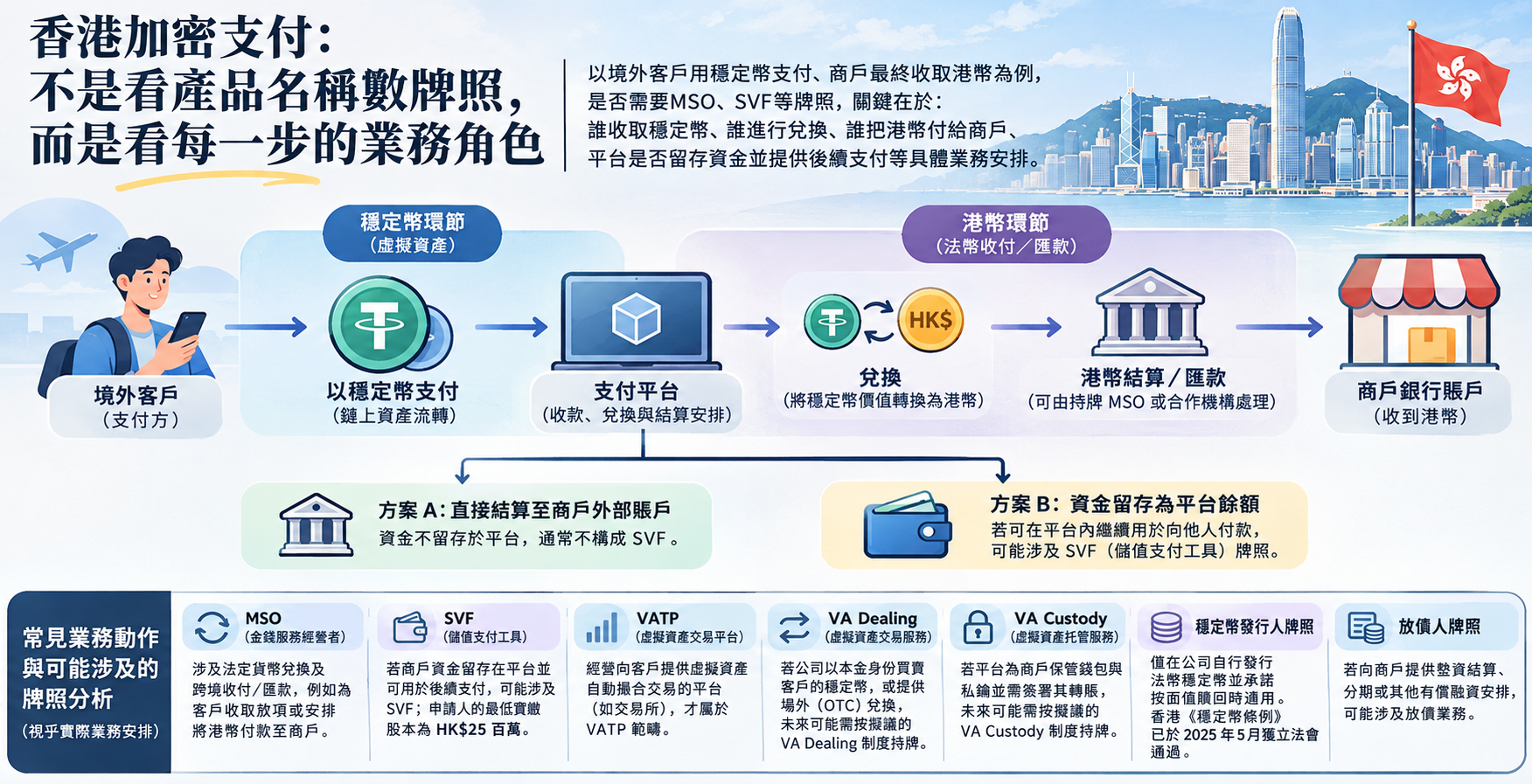
In an analysis published on November 16, 2026, Shao Jiadian of Mankun Blockchain Legal Services argues that a Hong Kong stablecoin payment product cannot be assessed by counting licences from its name. The questions are what the company does at each step: who receives the stablecoin, who converts it, who sends Hong Kong dollars to the merchant, and who controls any funds left on the platform.
From customer payment to merchant settlement
Consider a customer abroad paying in stablecoins while the merchant ultimately receives Hong Kong dollars in a bank account. Shao distinguishes the stablecoin transaction from the fiat payment. A money service operator (MSO) licence concerns fiat currency exchange and remittance; it does not itself authorise stablecoin trading. Whether the payment company’s Hong Kong dollar leg falls within MSO requirements depends on its role in receiving money for customers or arranging cross-border payments. A bank making the final transfer does not, by itself, remove the company from that analysis. If a licensed MSO handles settlement, the contracts and the partner’s licensed scope still matter.
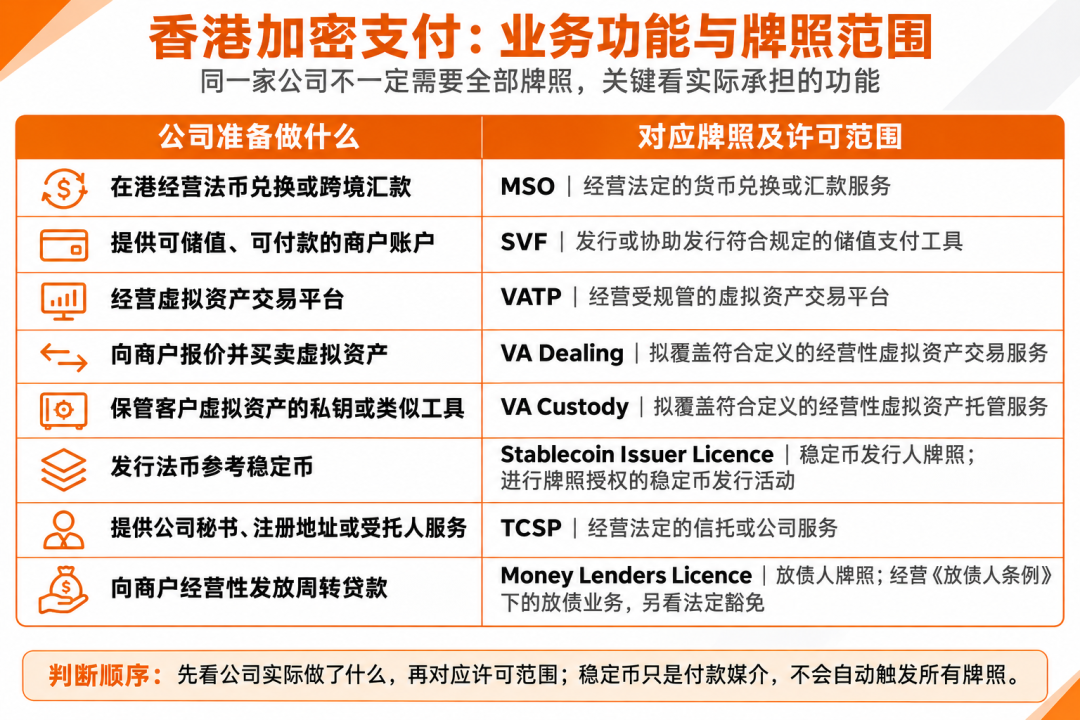
The next question is whether the merchant’s proceeds go to an external bank account or remain as a balance that can be used to pay others. Shao says retained funds with a further payment function may raise stored value facility (SVF) questions; merely displaying a balance does not automatically do so. The analysis cites a minimum paid-up capital requirement of HK$25 million for an SVF applicant. Direct settlement to the merchant’s external account, without a reusable platform balance, is a different product arrangement.
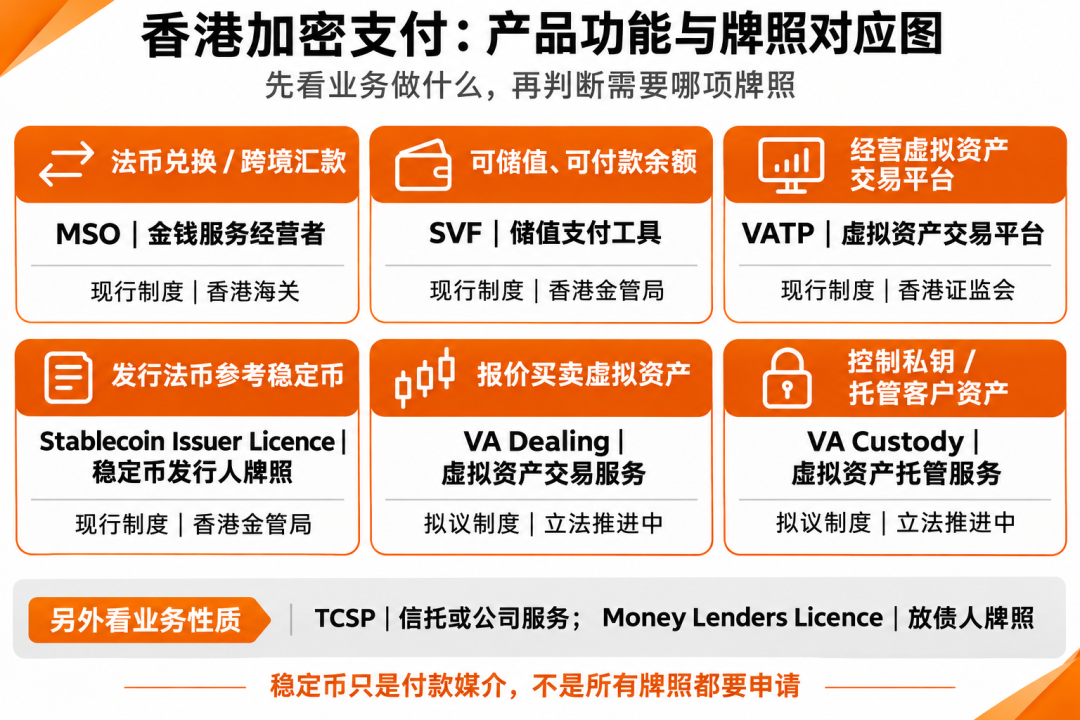
Trading, custody and other functions
Using a stablecoin for settlement is not the same as operating a virtual asset trading platform (VATP) or issuing a stablecoin. Shao associates VATP requirements with a customer trading platform, and the stablecoin issuer licence with issuing fiat-backed stablecoins and undertaking redemption. The analysis notes that Hong Kong’s Legislative Council passed the Stablecoins Ordinance in May 2025.

Two operational choices need separate attention. If the payment company buys customers’ stablecoins as principal or offers over-the-counter conversion, Shao says the proposed VA Dealing licensing regime may become relevant; MSO authorisation should not be treated as covering that activity. If the platform holds merchants’ private keys and must sign their transfers, the proposed VA Custody regime may become relevant. As described in the November 2026 analysis, these were prospective licensing questions, not licences every payment company already had to hold.
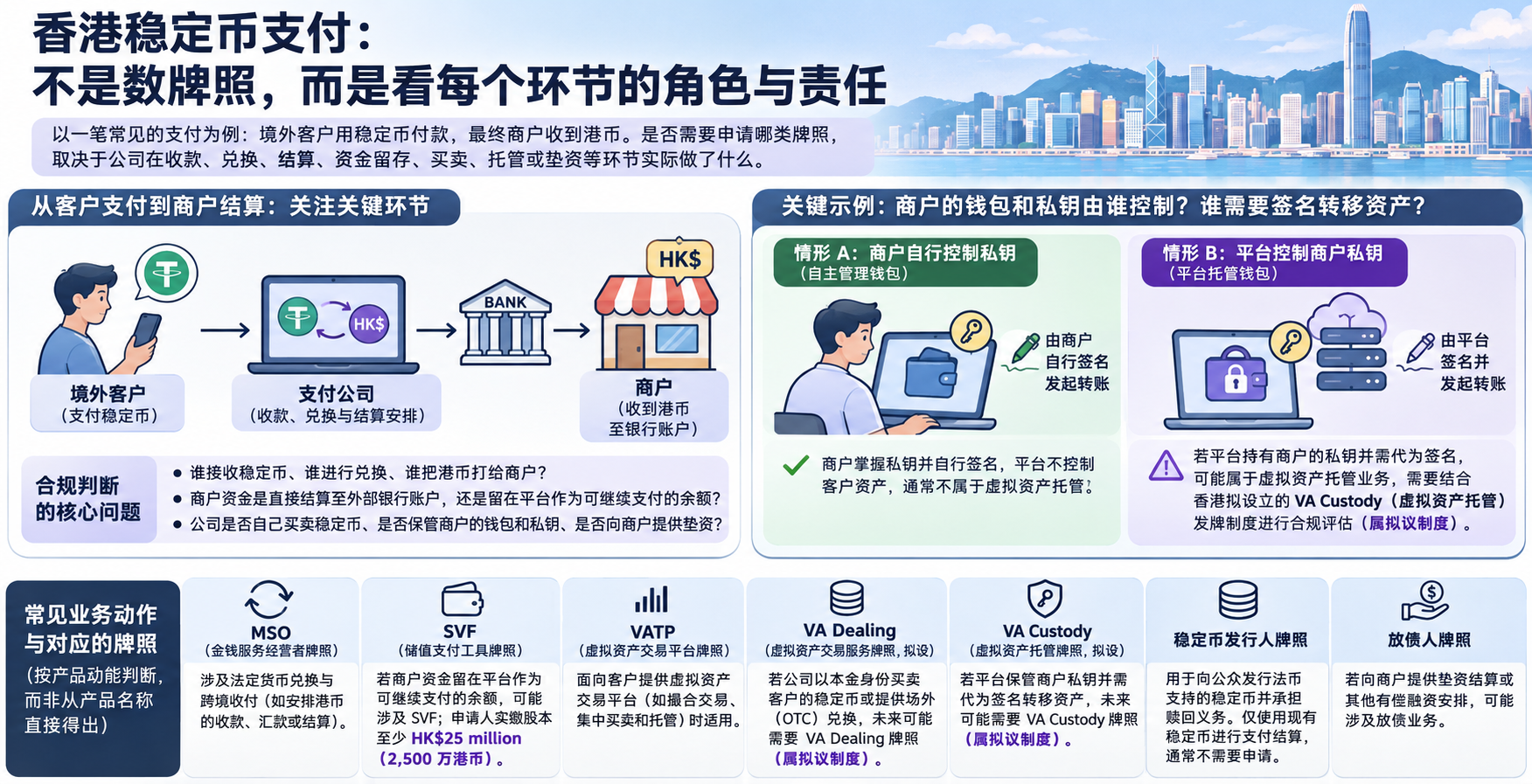
Finally, advancing a merchant’s settlement funds could raise money-lending questions if it amounts to paid financing. The practical starting point is therefore a diagram of the payment and each party’s responsibilities—not a blanket application for every licence mentioned in a crypto payments product plan.