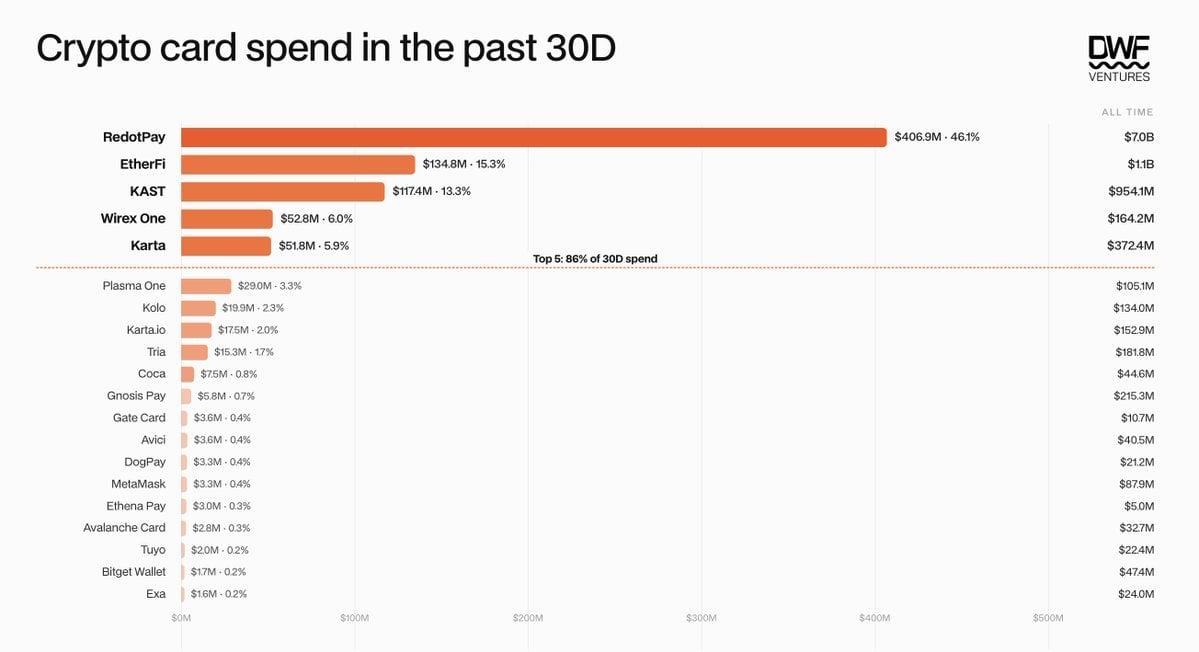
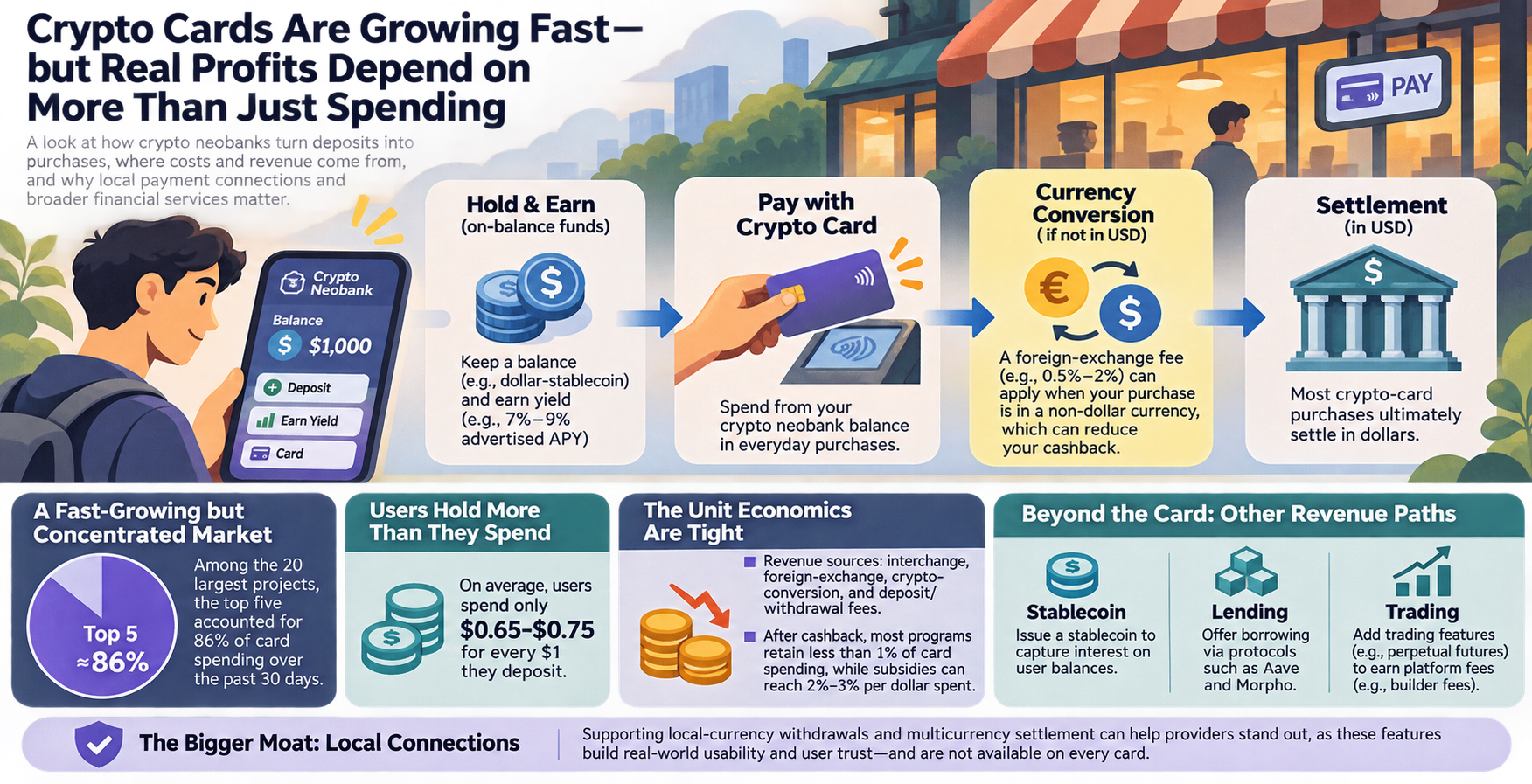
In a report published on November 23, 2026, DWF Ventures described a fast-growing but concentrated market for crypto debit cards. Citing publicly disclosed PaymentScan data, it said weekly card spending had exceeded $300 million, up nearly 200% year over year. Among the 20 largest projects, the top five accounted for 86% of spending over the preceding 30 days; RedotPay alone accounted for more than 46%. PaymentScan did not have public data for every card program, so those figures do not cover the entire market.
A card is only part of the payment journey
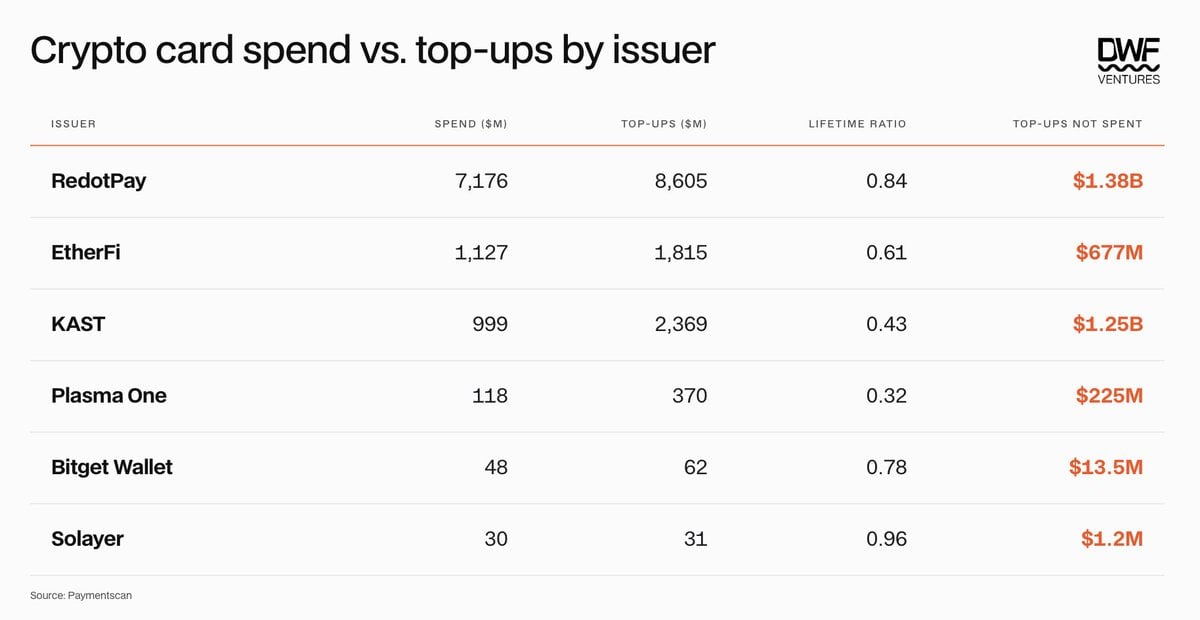
The report argues that customers increasingly use crypto neobanks to hold funds as well as spend them. On average, it says, users spend only $0.65–$0.75 for every $1 they deposit. It cites advertised annual yields of 7%–9% on dollar-stablecoin balances at EtherFi and KAST, two programs with lower spending relative to deposits. Those yields are not the same as a guaranteed return.
For a customer paying in a currency other than dollars, the card’s settlement currency also matters. DWF Ventures says most crypto-card purchases ultimately settle in dollars and that foreign-exchange fees of 0.5%–2% can erode a cashback reward. It identifies local-currency withdrawals and multicurrency settlement as potential ways for providers to stand out—not features available on every card.
Why more spending may not mean more profit
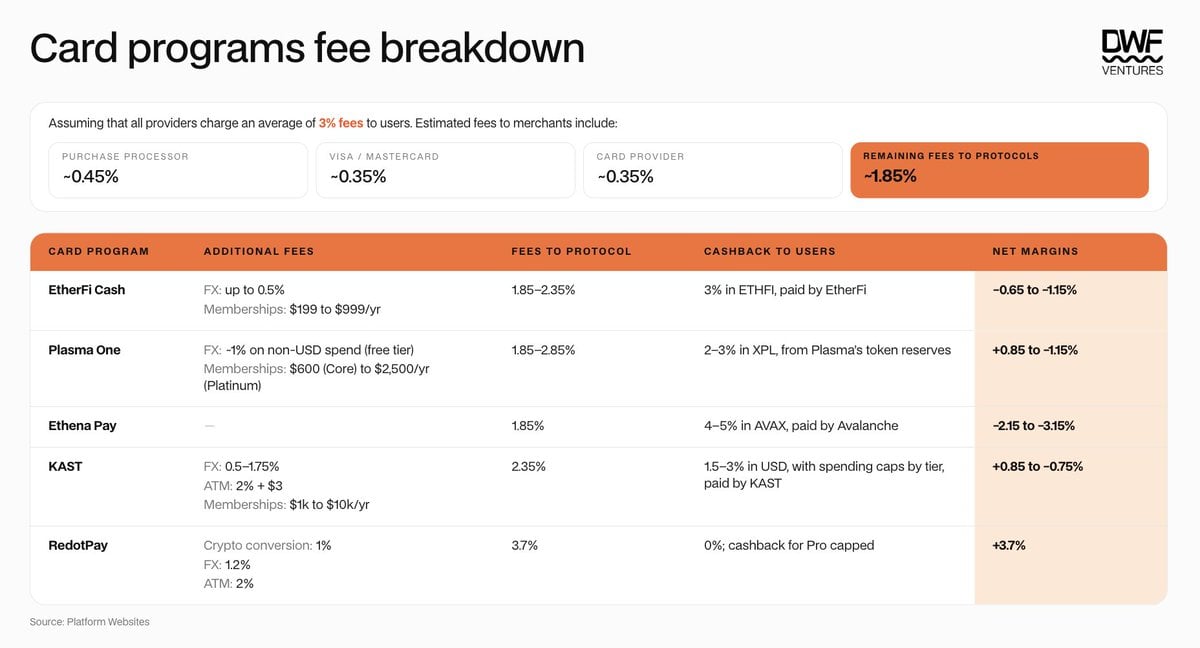
According to the report, card programs primarily earn interchange, foreign-exchange and crypto-conversion fees, and deposit or withdrawal fees. Cashback gives much of that revenue back to users. DWF Ventures says most programs retain less than 1% of card spending after cashback, while subsidies can reach 2%–3% per dollar spent. It presents RedotPay as an exception built around distribution and local withdrawal options rather than cashback alone: the report says the company holds financial licenses in Hong Kong, the United States, Canada and Argentina, and supports withdrawals in more than 35 fiat currencies through local partners.
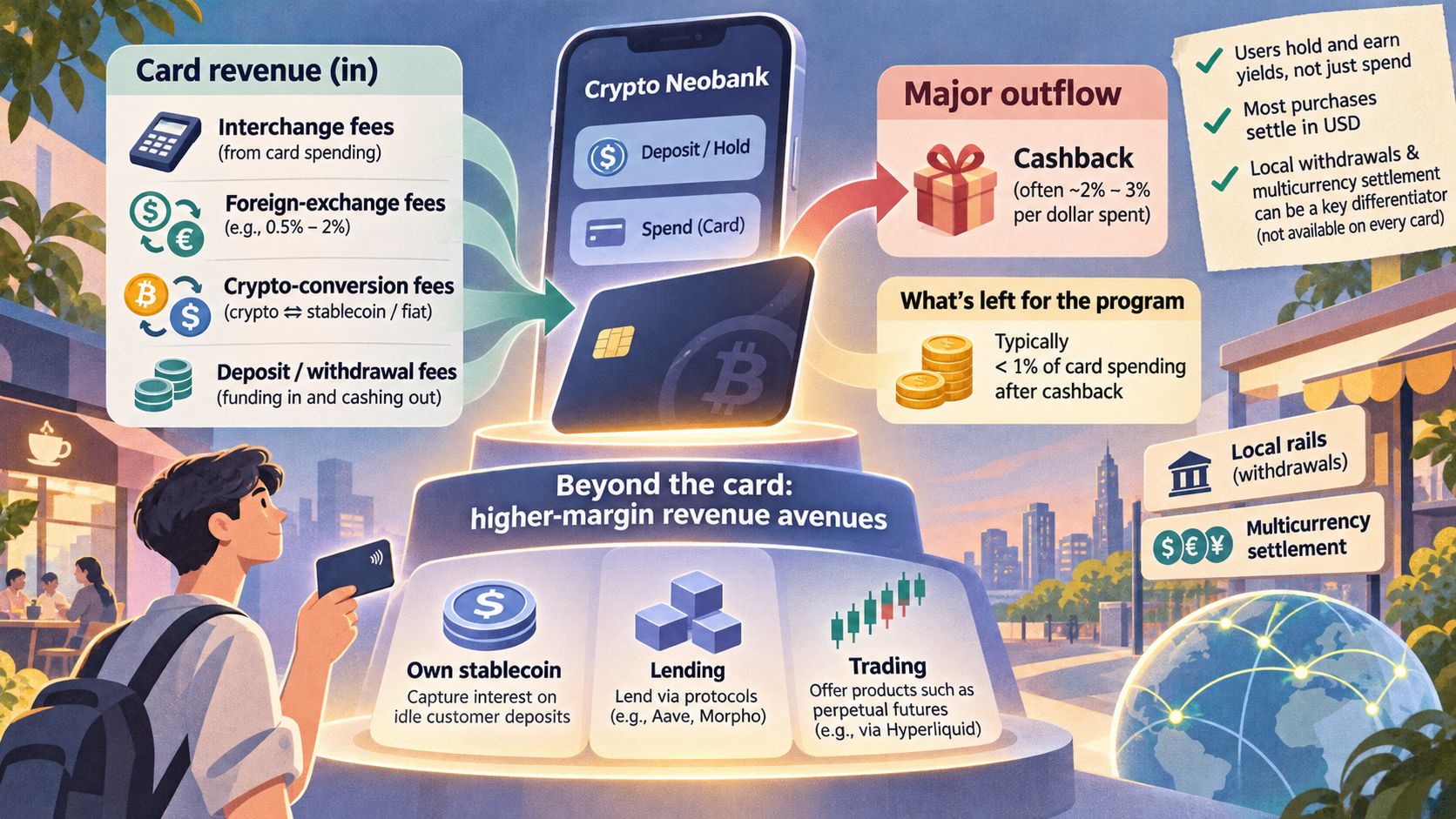
The report also outlines other revenue strategies, which should not be confused with profits already earned by every neobank. It says KAST has issued a stablecoin through M0, while EtherFi has launched ether.fi USD with Ethena. DWF Ventures estimates that EtherFi’s roughly $48 million in idle customer deposits could generate about $2 million a year at an assumed 4% baseline yield. It also cites lending through protocols such as Aave and Morpho, including more than $47 million in lending tied to ether.fi Cash’s Aave V4-based credit line. As a trading example, it says Phantom has earned more than $20 million in builder fees since adding perpetual futures through Hyperliquid.
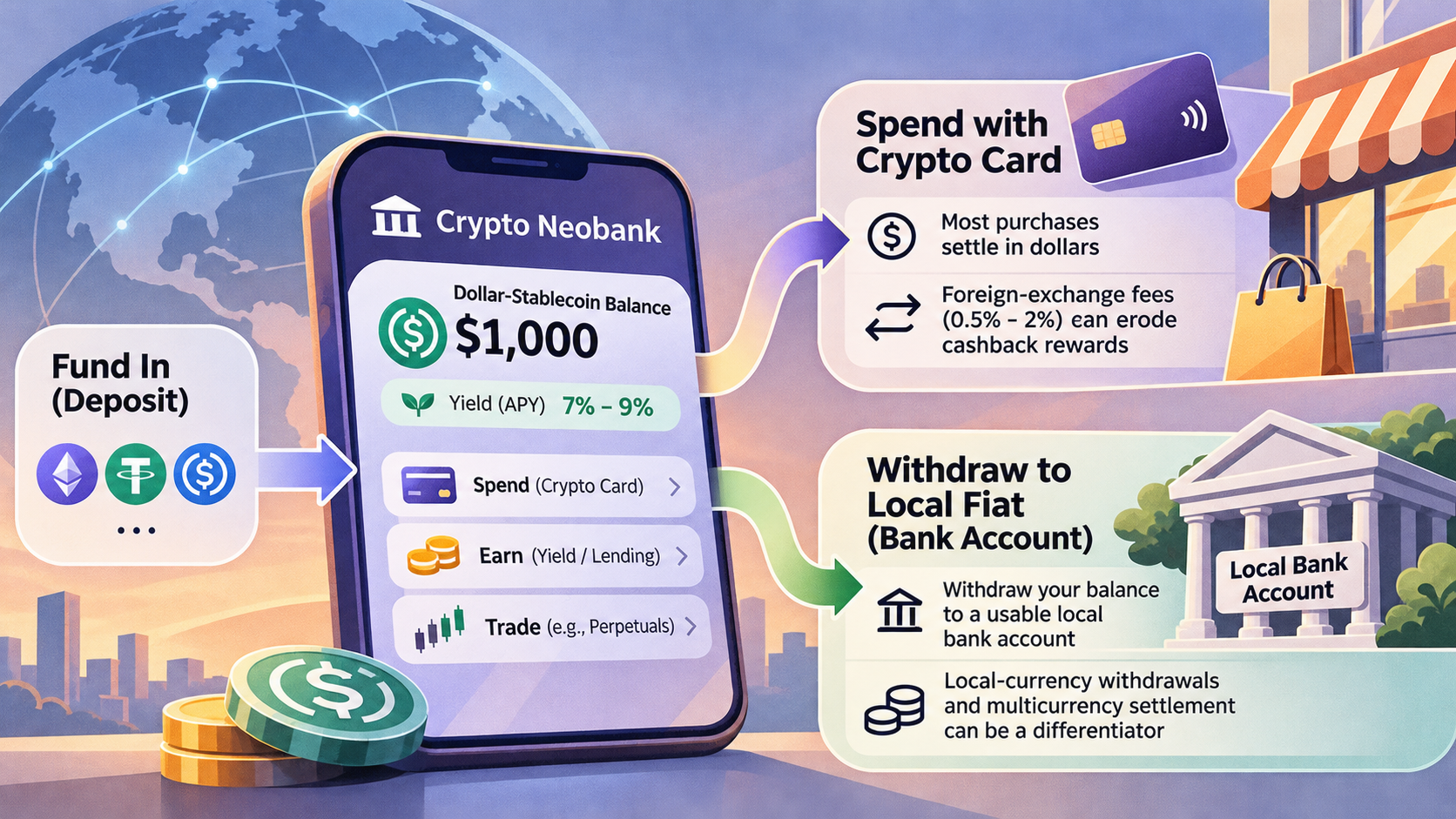
For everyday users, the practical question is not just whether an app offers a card or a yield. It is how funds get into the app, what currency a purchase settles in, what conversion costs apply, and whether the balance can be withdrawn into a usable local bank account. DWF Ventures argues that building those local connections—and earning users’ trust—will be harder to copy than issuing another card.