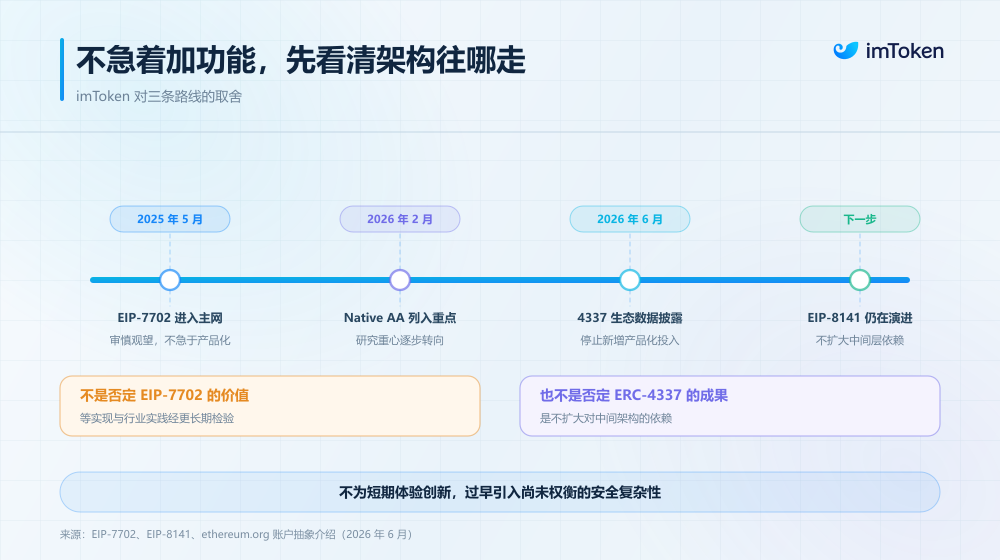
In its November 21, 2026 account of its wallet strategy, imToken said it was taking a cautious approach to two ways of making Ethereum accounts more programmable: it was not rushing to bring EIP-7702 across its products, and it had stopped new product-development investment in ERC-4337. The wallet provider said it was gradually shifting its research toward native account abstraction instead.
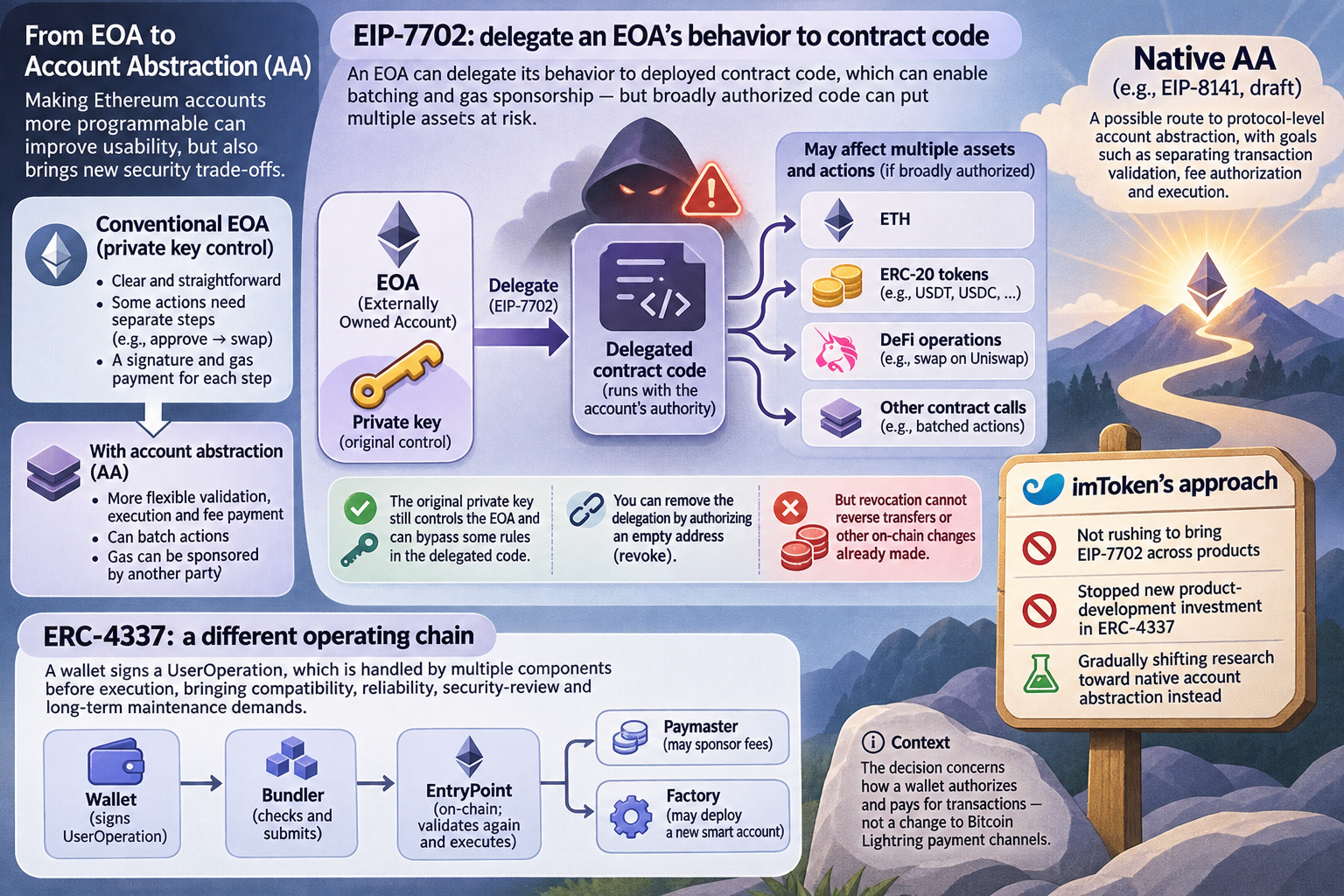
The decision concerns how a wallet authorizes and pays for transactions—not a change to Bitcoin Lightning payment channels.
What could change for a wallet user?
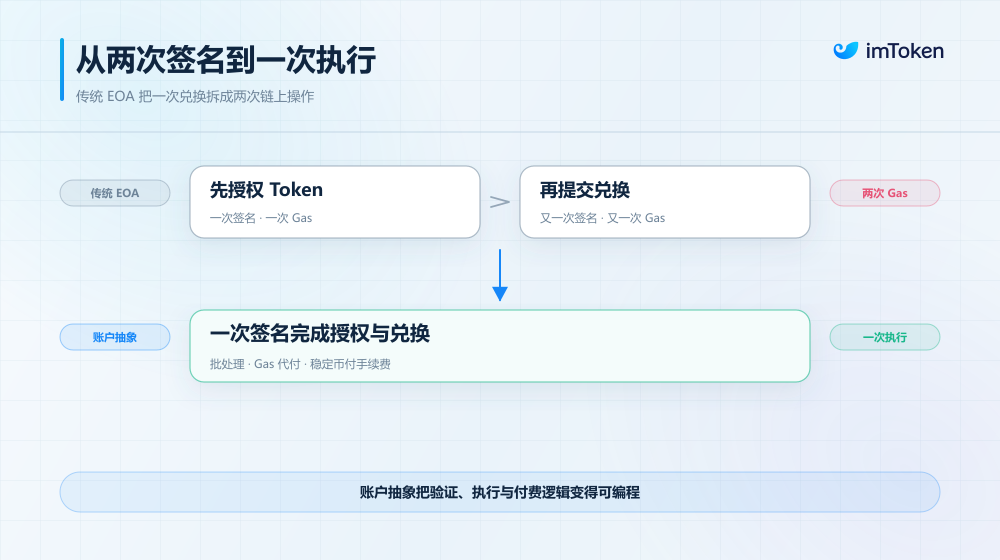
A conventional Ethereum externally owned account (EOA) is controlled by a private key. That model is relatively straightforward, but some actions take separate steps: swapping an ERC-20 token on Uniswap, for example, can require an approval followed by the swap, with a signature and gas payment for each transaction.
Account abstraction aims to make account validation, execution and fee payment more flexible. Potential features include batching actions and having another party cover gas. imToken’s concern is that a simpler-looking confirmation screen could conceal a consequential change in account permissions.
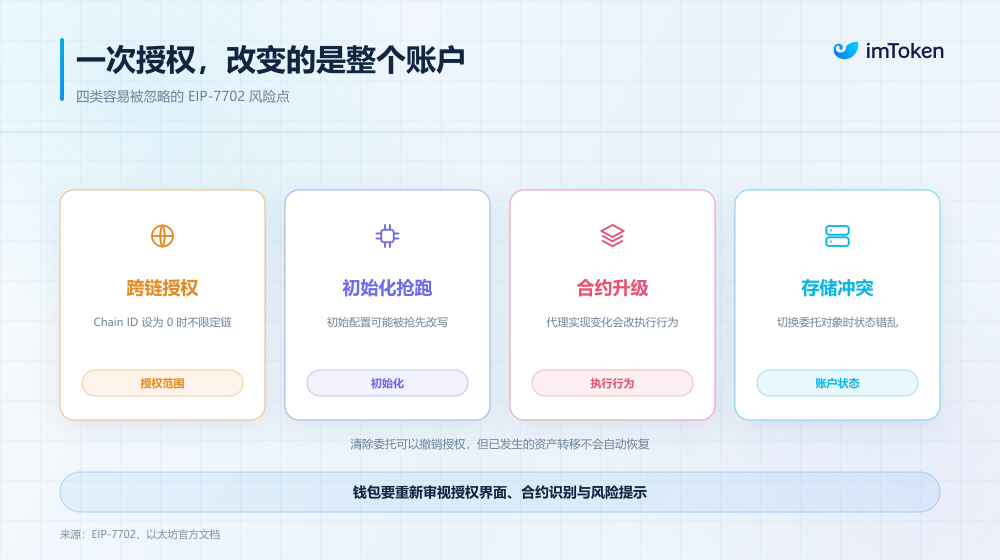
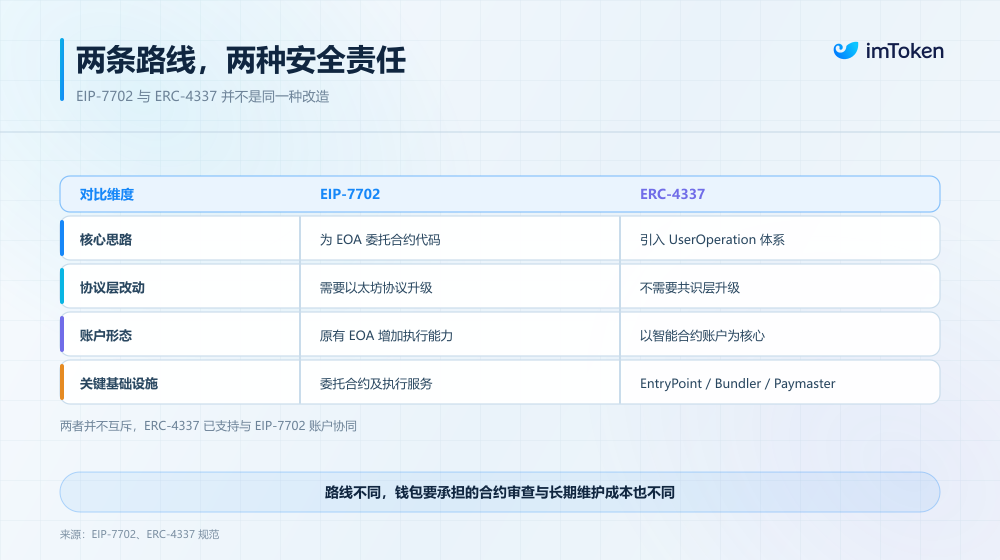
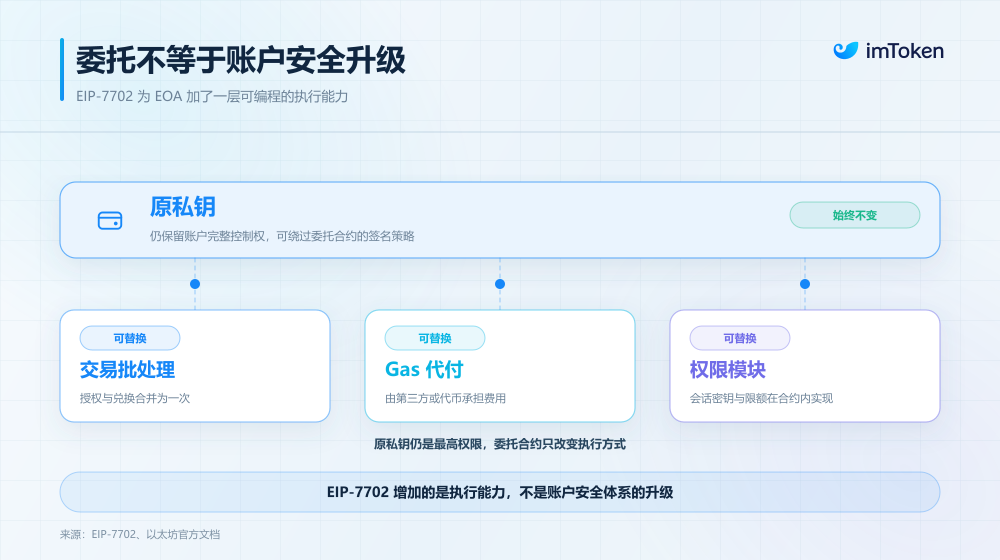
EIP-7702 lets an EOA delegate its behavior to deployed contract code. That can enable features such as batching and gas sponsorship, but imToken warned that delegation to malicious or seriously flawed code could put more than one token at risk if the code has broad authority. The original private key still controls the EOA and can bypass some rules in delegated code. A user can remove a delegation by authorizing an empty address, but doing so cannot reverse transfers or other on-chain changes already made.
ERC-4337 uses a different operating chain. A wallet signs a UserOperation; a bundler checks it and submits it through an on-chain EntryPoint, which validates it again before execution. A Paymaster may be involved when fees are sponsored, while a Factory may deploy a new smart account. imToken said those components bring compatibility, reliability, security-review and long-term maintenance demands. The two approaches are not mutually exclusive: ERC-4337 has added support for EIP-7702.
Why wait for native account abstraction?
imToken said it wanted stronger practices for explaining delegation, reviewing contracts, displaying permissions and responding to problems before broadly productizing EIP-7702. It described its halt to new ERC-4337 product investment as a resource decision, not a rejection of ERC-4337’s technical value.
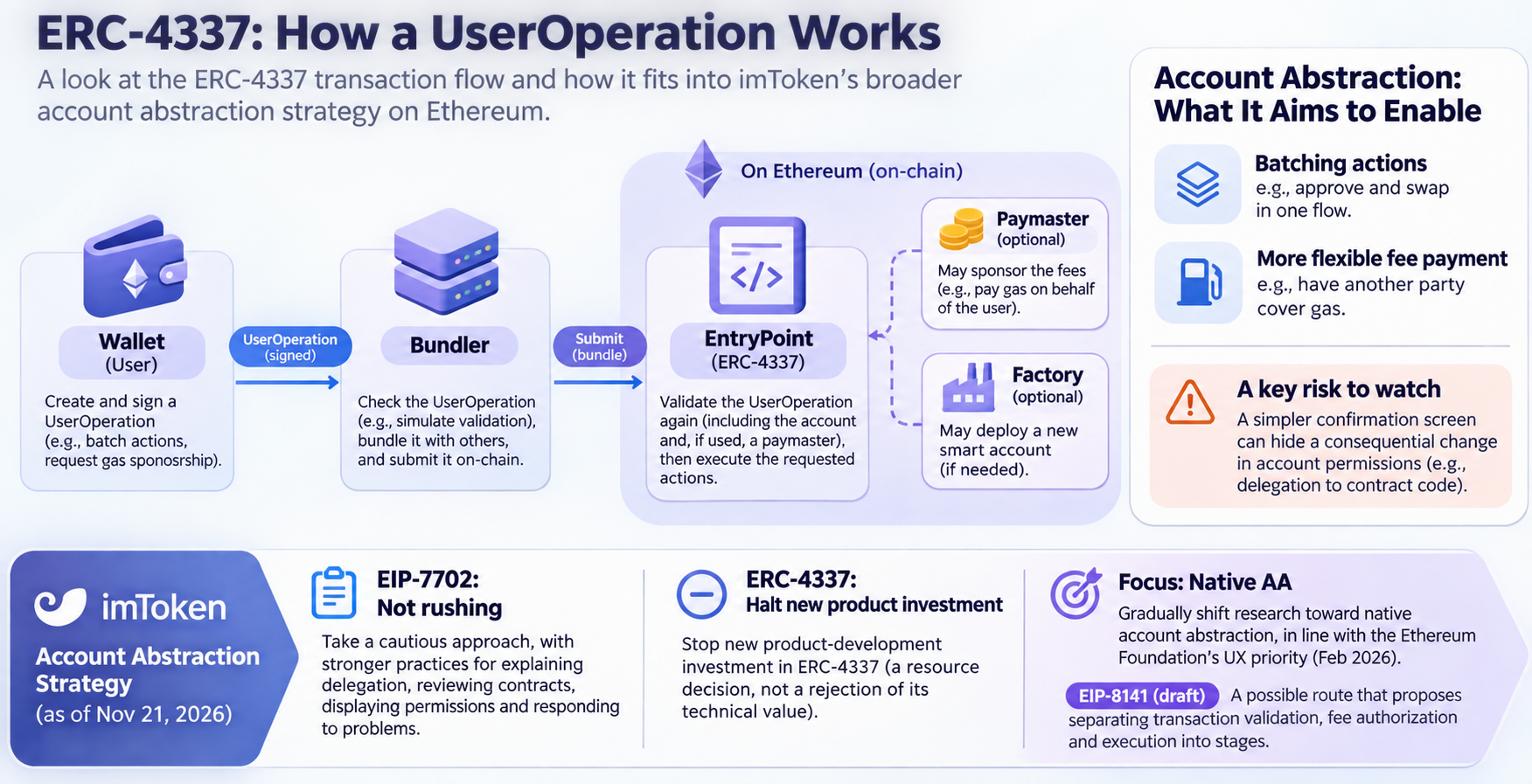
According to imToken, the Ethereum Foundation identified native account abstraction as a user-experience priority in February 2026. One possible route, EIP-8141, proposes separating transaction validation, fee authorization and execution into stages. It was still a draft at the time of imToken’s account, not a deployed replacement for existing wallet systems. Native support would not, by itself, remove the need to audit account code or test new payment and validation mechanisms.