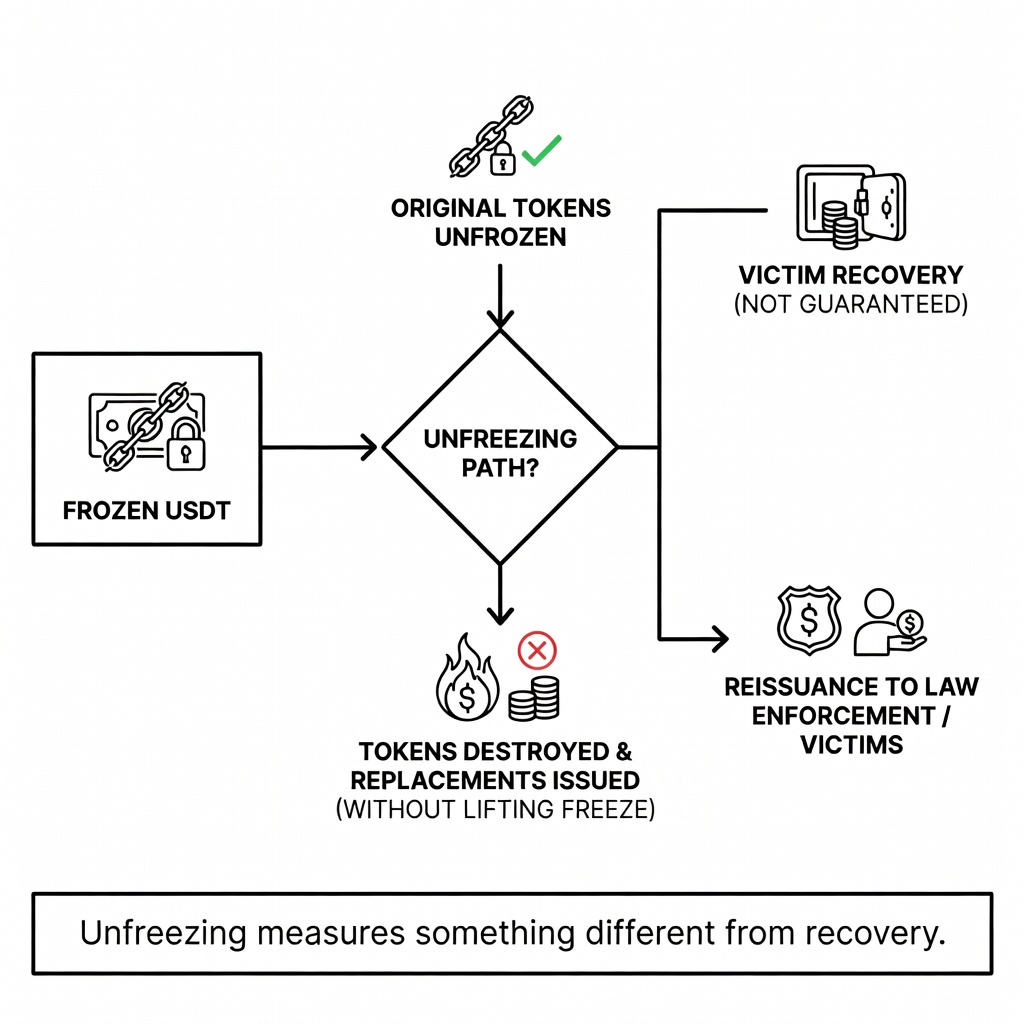
Tether said on November 27, 2026, that it had frozen more than $7 billion in USDT worldwide over links to illicit activity and had reissued $1.28 billion in USDT to law enforcement agencies and victims. It did not specify the period covered by either figure. The company said it works with more than 360 law enforcement agencies in 73 countries.
An on-chain freeze record does not show whether a victim got funds back. As blockchain analytics firm BitOK explained, Tether can destroy frozen tokens and issue replacements without lifting the original freeze. BitOK’s study measured the value of USDT unfrozen, not the amount victims recovered.
BitOK examined Ethereum and Tron from May 2024 to May 2026. Of the $481.6 million in USDT frozen on Ethereum in the first year, 19% was later unfrozen. Of the $403.2 million frozen in the second year, 1.2% was unfrozen. On Tron, 94% of the USDT frozen before May 2024 was still frozen as of May 2026.
Bloomberg previously reported that Tether’s lawyers had referred to a 20% reissuance fee. Tether said the fees cover the reissuance process and legal costs. Its published recovery procedure separately allows a fee of up to 10% for some mistaken transfers.
In connection with the October 2026 Binance theft, Tether froze more than $1.56 billion in USDT. As of November 27, it had not said when those funds would be returned.