
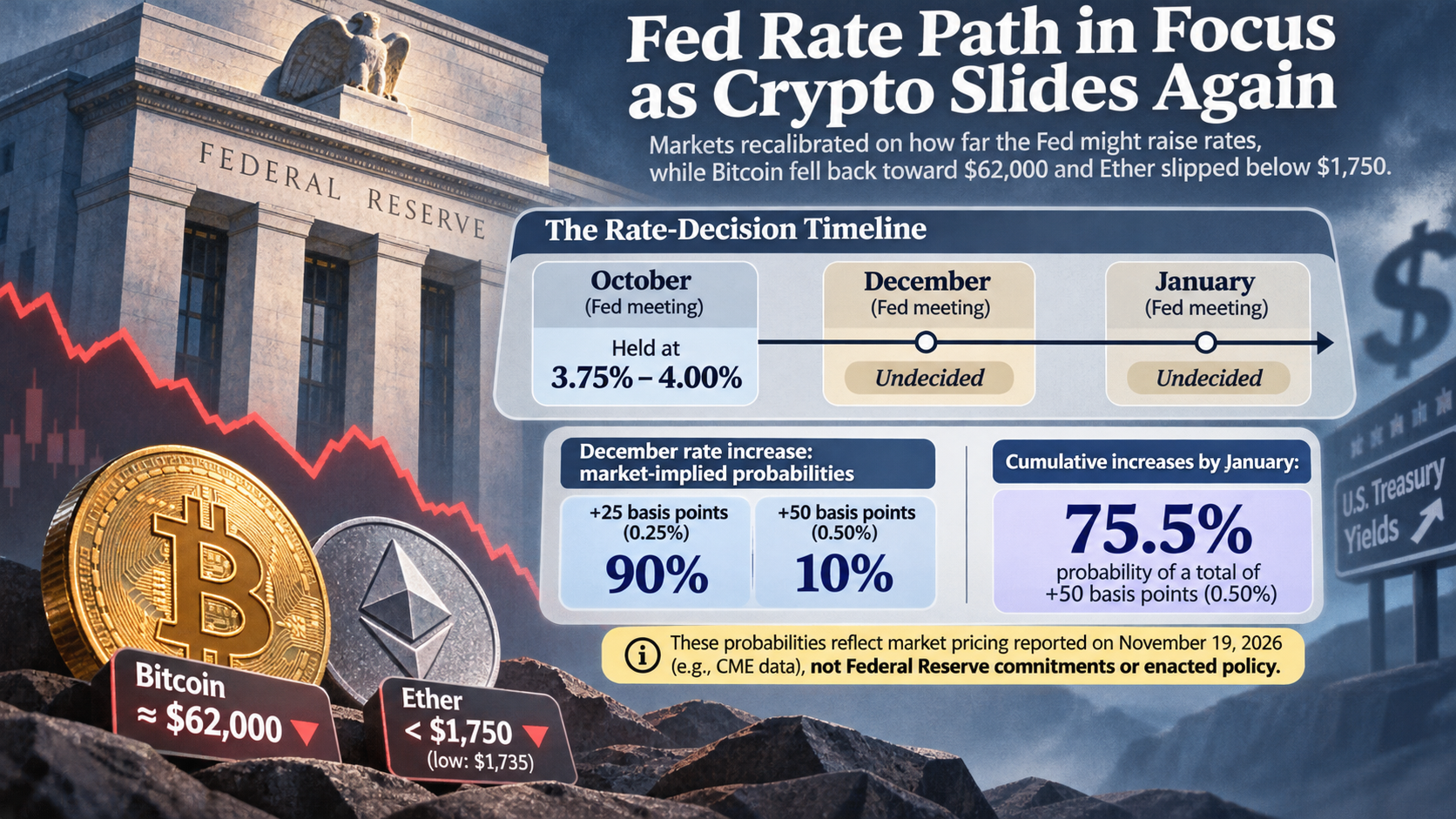
As reported on November 19, 2026, Bitcoin had fallen back toward $62,000 for the second time in a week, while Ether slipped below $1,750 and briefly touched $1,735. The decline came as investors reassessed how far the US Federal Reserve might raise interest rates. Neither a December nor a January increase had been decided.
The rate question
Fed governor Christopher Waller told CNBC that inflation was moving in the wrong direction, with price pressures spreading into services. He favored a 50-basis-point increase in December, though he said a 25-basis-point move could work if the Fed clearly signaled another 25-basis-point increase in January.
Minutes of the Fed’s October meeting, released on the morning of the report, showed disagreement over the pace of tightening. After a 25-basis-point increase in September, the Fed had held its rate range at 3.75%–4.00% in October. Governors and regional Fed officials discussed further increases; two officials raised the possibility of a December move larger than 25 basis points if subsequent inflation data disappointed.
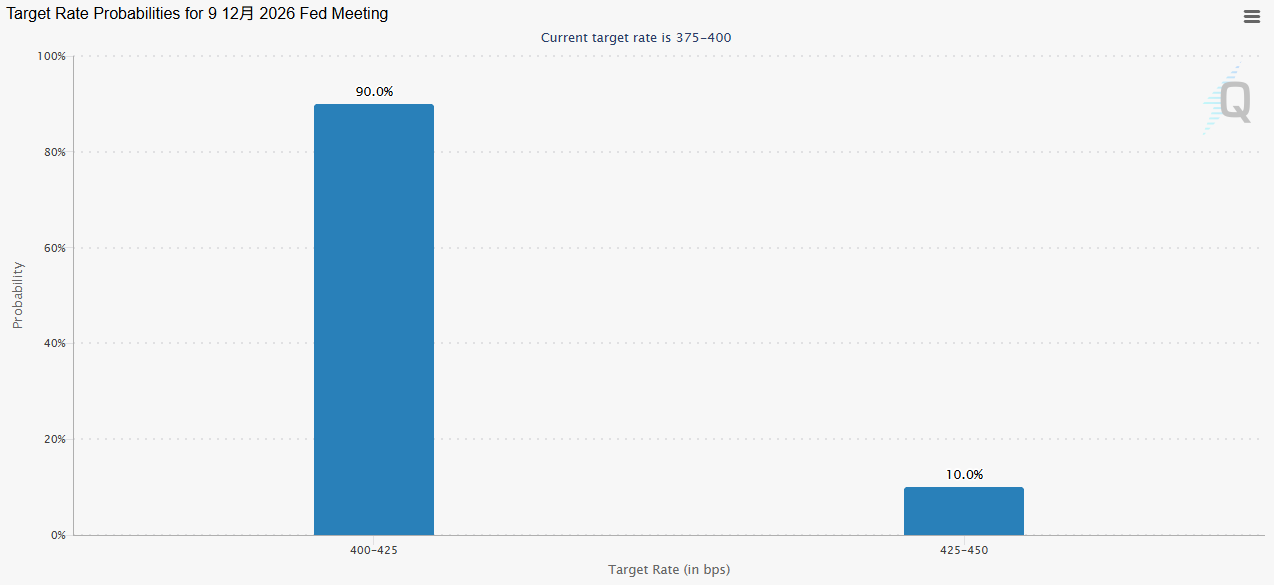
CME data cited in the report put the probability of a 25-basis-point December increase at 90%, versus 10% for a 50-basis-point increase. The probability of increases totaling 50 basis points by January was 75.5%. Those figures describe market pricing at the time, not Fed commitments. Economists cited in the report differed on whether improving inflation data might reduce the need for further increases.
What Bitcoin traders were watching
Bitwise chief investment officer Matt Hougan wrote in a November 17 report that unexpectedly high US inflation and roughly $2 billion in leveraged positions liquidated during a thinly traded weekend had amplified Bitcoin’s earlier drop. After the October Fed minutes, attention shifted toward whether a strong dollar and elevated Treasury yields would keep pressuring the market.
Bitget analyst Lewis Huang said that a further rise in the dollar and Treasury yields, combined with Bitcoin losing the area around $62,000, could extend the sell-off. Wintermute OTC trader Jasper de Maere saw little clear buying support from exchange-traded funds, crypto treasury companies, retail traders or institutions. Talos data showed orders within 1% of Bitcoin’s midpoint were down nearly 38% from their high earlier in the year, before the Binance theft cited in the report. A thinner order book can make a given trade move the price more sharply.
Analysts did not agree that $62,000 was a bottom. Fidelity’s Jurrien Timmer said Bitcoin was near a support line in his long-term model, while Wellington-Altus strategist James Thorne identified $57,000 as the level that would invalidate his bullish reading of the weekly chart. Trader Peter Brandt warned of a possible head-and-shoulders pattern, which would imply greater downside risk if confirmed.