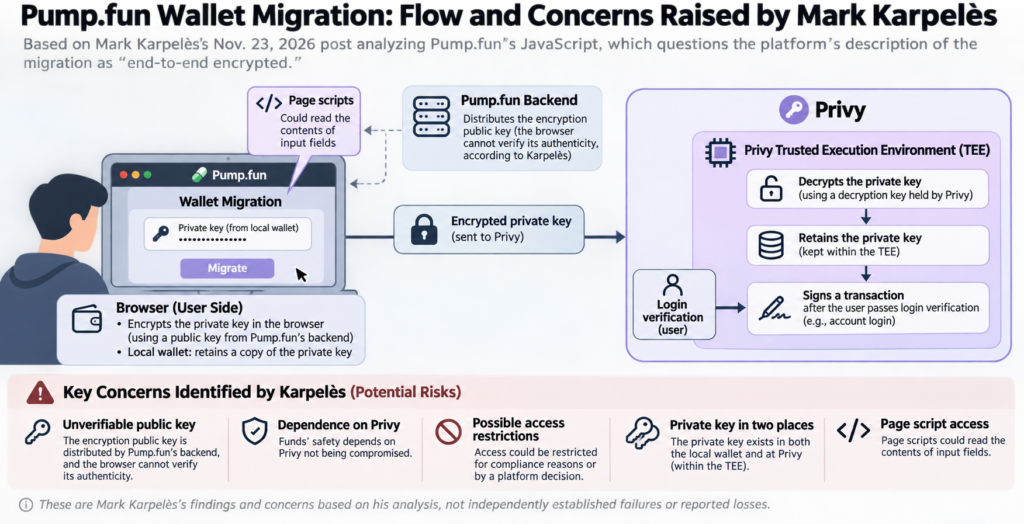
In a November 23, 2026 post, former Mt. Gox CEO Mark Karpelès said his analysis of JavaScript served by Pump.fun led him to question its description of wallet migration as “end-to-end encrypted.”
According to Karpelès, the private key is encrypted in the browser, but Privy holds the key needed to decrypt it. He said Privy’s trusted execution environment (TEE) decrypts and retains the private key, then signs transactions after the user passes login verification.
Karpelès identified several potential risks: the browser cannot verify the authenticity of the encryption public key distributed by Pump.fun’s backend; funds depend on Privy not being compromised; access could be restricted for compliance reasons or by a platform decision; the private key exists in both the local wallet and at Privy; and page scripts could read the contents of input fields. These are Karpelès’s findings and concerns, not independently established failures or reported losses.